Glucose Oxidase Storage, Handling, and Premix Use
Glucose Oxidase is an oxygen-aware enzyme system. In dry bulk form, it can be handled reliably in industrial settings; in the presence of water, glucose, and oxygen, it becomes chemistry. That distinction should drive how your team receives, stores, weighs, premixes, and stages the material before production.
This guide is written for procurement, QA, warehouse, and formulation teams working with bulk Glucose Oxidase powder and Glucose Oxidase premixes.
What to check when bulk powder arrives
Before releasing a lot into your production system, confirm the basics at receiving.
- Container integrity: no punctures, loose closures, water marks, crushed drums, torn liners, or compromised seals.
- Lot identity: lot number, product name, declared concentration grade, net weight, and documentation should match the purchase order.
- Physical condition: powder should be free-flowing or readily breakable; investigate hard caking, visible wetting, abnormal discoloration, or odor pickup.
- Temperature exposure: note any evidence of prolonged heat exposure during transit, especially in warm seasons or high-temperature logistics routes.
- Document control: retain the lot documents with internal traceability records before the material is subdivided or blended.
If a container shows moisture ingress, hold it under QA review rather than blending it into a premix. Moisture problems are difficult to reverse and can create uneven performance in finished applications.
Recommended storage approach
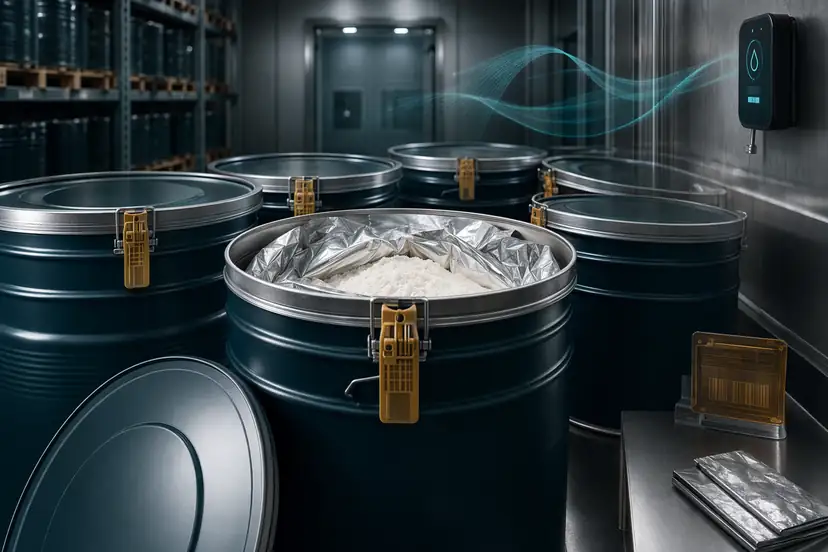
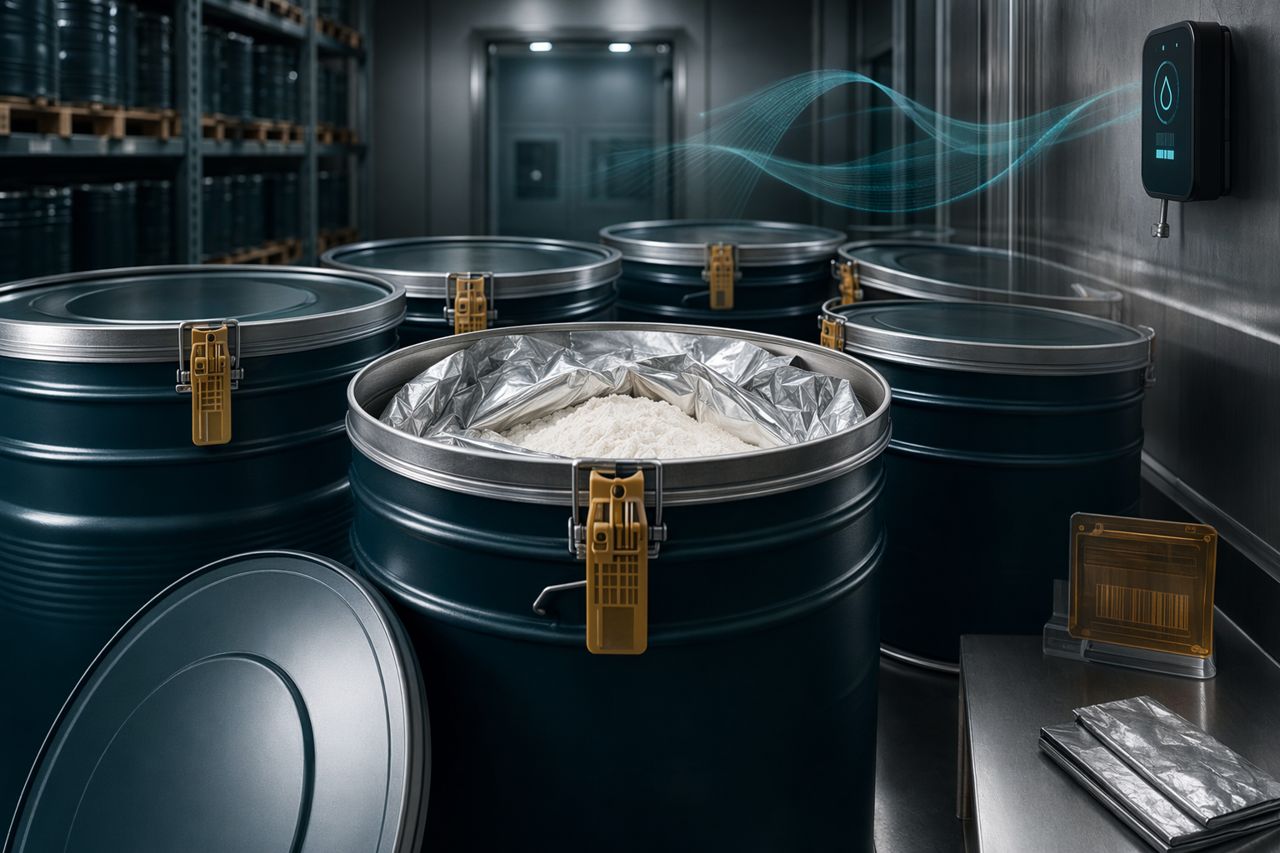
The main storage objective is simple: keep Glucose Oxidase dry, closed, cool, and traceable.
Primary storage controls
- Store sealed containers in a clean, dry area away from steam lines, washdown zones, roof leaks, and open drains.
- Avoid repeated temperature swings that can pull condensation into the headspace.
- Keep containers closed until the material is actually needed for weighing or sampling.
- Use first-in, first-out lot rotation unless QA has assigned a different release priority.
- Keep the enzyme away from strong acids, strong alkalis, oxidizing chemicals, reducing agents, and sanitation chemicals.
- Prevent odor transfer from flavors, solvents, packaging inks, or other volatile materials in the same warehouse zone.
Refrigerated storage may be appropriate for longer inventory holding, but it introduces a condensation risk. If a cold container must be opened, allow the sealed package to equilibrate toward room conditions before breaking the liner or closure.
Handling powder without losing control
Glucose Oxidase powder should be treated as a fine industrial enzyme ingredient. The handling goal is to protect personnel, protect the enzyme, and protect batch uniformity.
Good weighing and dispensing practice
- Use local dust extraction or enclosed transfer where available.
- Wear site-approved PPE for enzyme powders, including respiratory protection where the risk assessment requires it.
- Use dry scoops, dry weighing vessels, and clean transfer tools.
- Minimize open-container time during weighing.
- Close liners and outer packaging immediately after removing material.
- Do not return spilled, exposed, or questionable material to the original container.
- Record lot number, opened date, quantity removed, operator, and destination batch or premix number.
Enzyme dust exposure is both a worker-safety issue and a housekeeping issue. Poor dust control can also create cross-contact risk between product lines.
Why premix Glucose Oxidase?
Premixing is used when the direct addition rate is too small for reliable plant-scale distribution or when the customer wants a ready-to-dose ingredient system.
A well-designed Glucose Oxidase premix can help with:
- dosing accuracy at production scale;
- uniform distribution in flour, dry blends, seasonings, tablets, coatings, or technical matrices;
- easier operator handling;
- reduced risk of localized over-addition;
- simplified procurement of multi-component systems.
A poor premix can do the opposite: create hot spots, absorb moisture, react prematurely, or drift in performance during storage.
Premix carrier selection
Choose the carrier based on the application, regulatory category, moisture profile, particle behavior, and downstream process.
Common carrier considerations include:
- Low moisture: the carrier should not introduce avoidable water into the blend.
- Compatible pH contribution: avoid strongly acidic or alkaline carriers unless the full formulation has been tested.
- Particle size match: closer particle behavior reduces segregation during transport and discharge.
- Low reactivity: avoid carriers or co-ingredients that trigger premature reaction under storage conditions.
- Application fit: food, feed, diagnostic, cosmetic, or technical uses may require different carrier standards.
- Flow performance: consider anticaking strategy if the premix must discharge through hoppers, feeders, or sachet lines.
Glucose-containing carriers or substrates need careful review. In a very dry system, the reaction is limited; with moisture and oxygen present, reaction can begin before the process step where it is wanted.
Ingredients that need compatibility review
Glucose Oxidase systems are often formulated with other functional ingredients. Some are useful; others can reduce stability or change the reaction profile.
Review compatibility carefully when a premix includes:
- glucose, dextrose, honey powder, syrups, or other readily available substrates;
- reducing agents such as sulfites or strong antioxidants;
- oxidizing ingredients or peroxide-sensitive materials;
- metal salts that may influence color, flavor, or downstream reactions;
- catalase or peroxide-management components;
- strong acids, strong alkalis, or aggressive buffer systems;
- high-moisture powders, hygroscopic salts, or carriers with poor moisture control;
- flavor systems, colorants, vitamins, or actives that may be sensitive to oxidation.
The right answer is application-specific. A baking improver, oxygen scavenger, preservation system, and biosensing reagent may all use Glucose Oxidase, but their storage and premix risks are not identical.
Premix manufacturing sequence
A controlled premix process usually performs better than a fast one.
Practical sequence
- Confirm the released lot and target formulation.
- Condition the carrier and packaging materials in a dry production room.
- Pre-screen the carrier if lumps or oversized particles are expected.
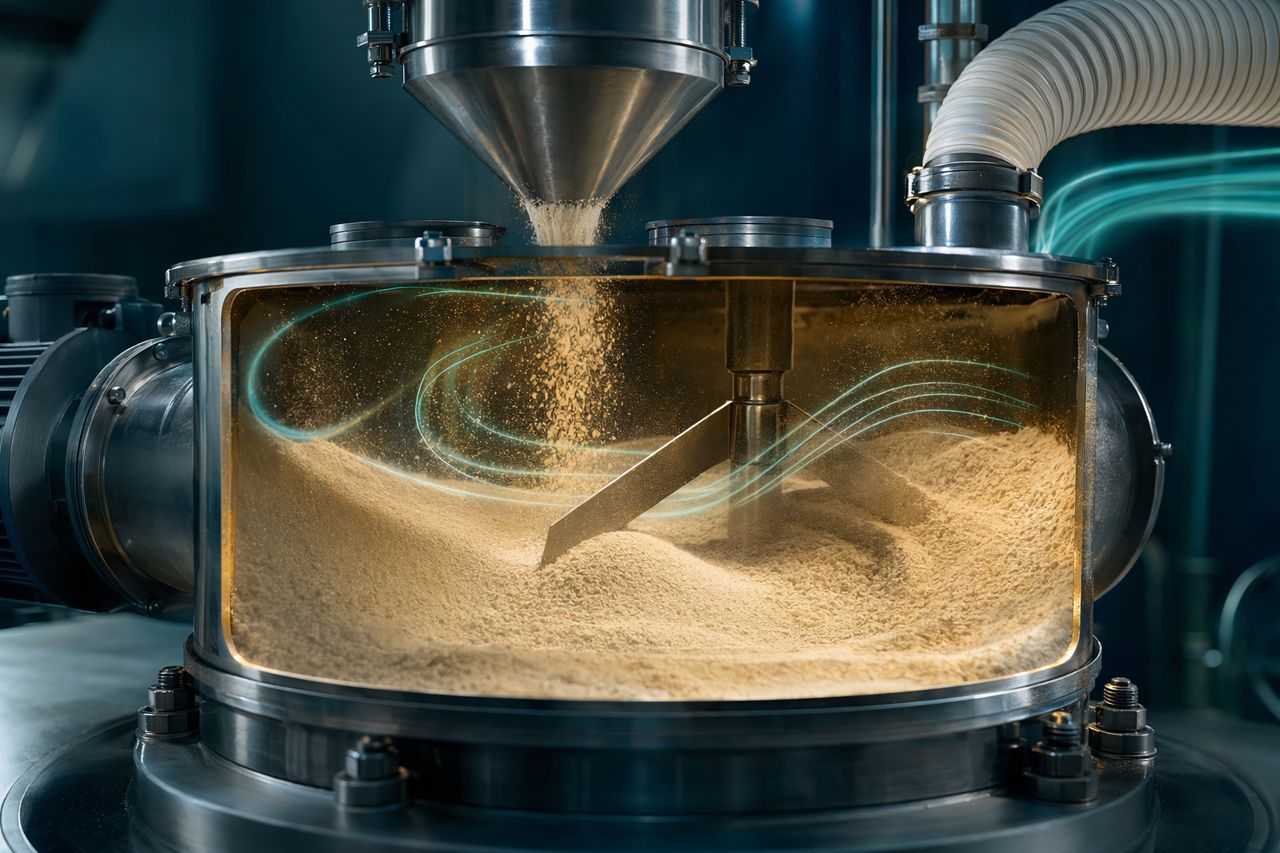
- Pre-dilute Glucose Oxidase with a portion of the carrier before charging the full blend.
- Use mixing intensity that distributes the enzyme without unnecessary heat, dusting, or particle damage.
- Avoid adding wet components unless the premix is designed for immediate use.
- Discharge promptly into moisture-protective packaging.
- Retain samples from the beginning, middle, and end of discharge for internal homogeneity review.
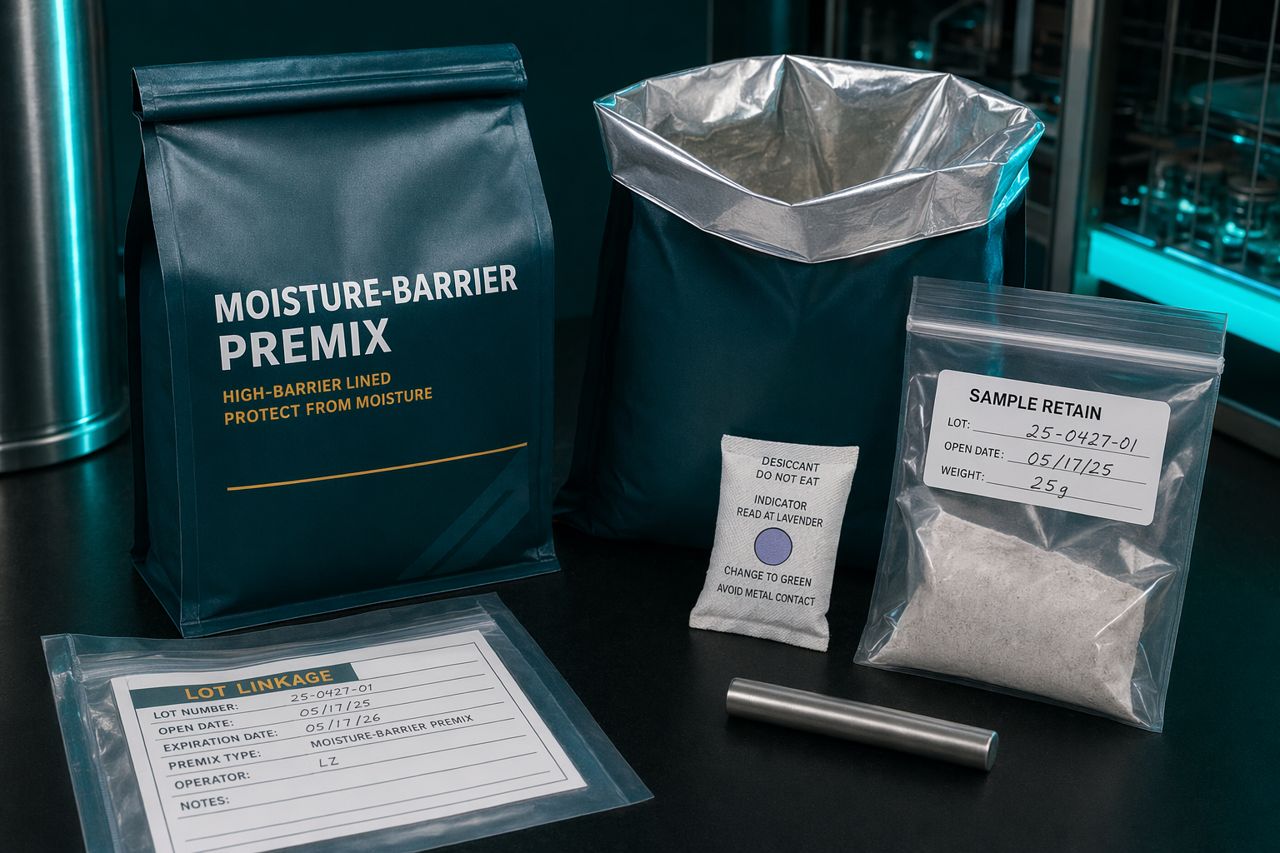
- Label the premix with lot linkage, concentration factor, manufacturing date, storage conditions, and retest plan.
Do not rely on visual uniformity alone. Many enzyme premixes look homogeneous before they are actually distribution-stable.
Packaging for premixes
Packaging should defend against moisture first, then physical damage and segregation.
Useful packaging features may include:
- high-barrier liners;
- tight closures after partial use;
- desiccant strategy where appropriate;
- limited headspace for small packs;
- tamper-evident seals;
- clear open-date and use-by labeling;
- pack sizes matched to real production consumption.
Large bags can be efficient for procurement but inefficient for stability if they remain open through many production cycles. For sensitive or low-use applications, smaller packs may reduce waste and variability.
Using premixes in production
Once the premix reaches the plant floor, the same oxygen-aware logic applies.
- Add the premix at the point where it can disperse before water activates the system.
- Avoid dumping concentrated premix directly onto wet acidic or alkaline zones.
- Define maximum hold time after hydration, especially in batters, doughs, sauces, coatings, or liquid intermediates.
- Confirm that downstream heat, pH, oxygen availability, and substrate availability match the intended function.
- Keep opened premix containers closed between additions.
- Do not stage open powder near steam, washdown, or hot process surfaces.
For baking, Glucose Oxidase may be used to influence dough structure through controlled oxidation. For oxygen scavenging and preservation systems, the emphasis shifts to substrate availability, package environment, and peroxide management. Premix design should follow the end use, not a generic enzyme-handling template.
Common issues and what they usually indicate
| Observation |
Likely area to investigate |
| Caking in bulk powder |
moisture ingress, condensation, poor closure, humid weighing room |
| Uneven finished-product effect |
segregation, insufficient premix dilution, poor mixing sequence, inconsistent addition point |
| Weak process response |
heat exposure, incompatible co-ingredients, long hydrated hold time, incorrect process pH |
| Unexpected color or flavor shift |
peroxide-sensitive ingredients, metals, excessive reaction before final process step |
| Dusting during addition |
particle size mismatch, aggressive dumping, poor feeder design, insufficient containment |
| Variable bag-to-bag results |
premix segregation, inadequate discharge sampling, inconsistent carrier moisture |
Treat troubleshooting as a system review. Glucose Oxidase performance depends on the enzyme, but also on water, oxygen, glucose availability, pH, temperature, packaging, and time.
Procurement notes for premix planning
When requesting pricing or technical support, prepare the details that determine the right grade and pack format.
Useful information includes:
- target application and regulatory category;
- dry blend, liquid system, dough, coating, tablet, sachet, or package insert format;
- expected addition point;
- carrier preference or restrictions;
- moisture sensitivity of the finished formulation;
- expected storage temperature and shelf-life target;
- monthly or annual volume estimate;
- desired pack size;
- whether the enzyme will be purchased as bulk powder or a custom premix.
Clear inputs shorten quotation time and reduce the risk of overbuilding or underbuilding the premix.
Request pricing or premix support
If your team is planning a Glucose Oxidase premix, changing pack size, or qualifying a bulk powder supply, send the application details. Oxyveil can help scope grade selection, packaging, and commercial supply options.