
Glucose Oxidase · Industrial Enzyme
How to Select Bulk Glucose Oxidase for Production | Oxyveil
A practical B2B guide to selecting bulk Glucose Oxidase for baking, oxygen scavenging, preservation, biosensing, and industrial formulation work.
A practical B2B guide to selecting bulk Glucose Oxidase for baking, oxygen scavenging, preservation, biosensing, and industrial formulation work.
Bulk Glucose Oxidase should be selected by matching reaction behavior to your process, not by choosing the strongest-looking line on a specification sheet. The right grade depends on why you need the enzyme, where oxygen enters the system, how glucose is supplied, and what your process does with the hydrogen peroxide and gluconic acid produced.
Glucose Oxidase catalyzes the oxidation of glucose in the presence of oxygen. In production, that chemistry can be used to remove oxygen, create controlled oxidative effects, support preservation strategies, improve dough behavior, or form the biochemical basis of glucose detection. The same reaction can be valuable or problematic depending on dose timing, oxygen transfer, substrate availability, pH, temperature exposure, water activity, and downstream peroxide management.
This guide is written for procurement, formulation, QA, and process teams comparing bulk Glucose Oxidase grades for production use.
Before comparing suppliers or grades, define the commercial job of the enzyme. Glucose Oxidase is usually purchased for one of five practical reasons.
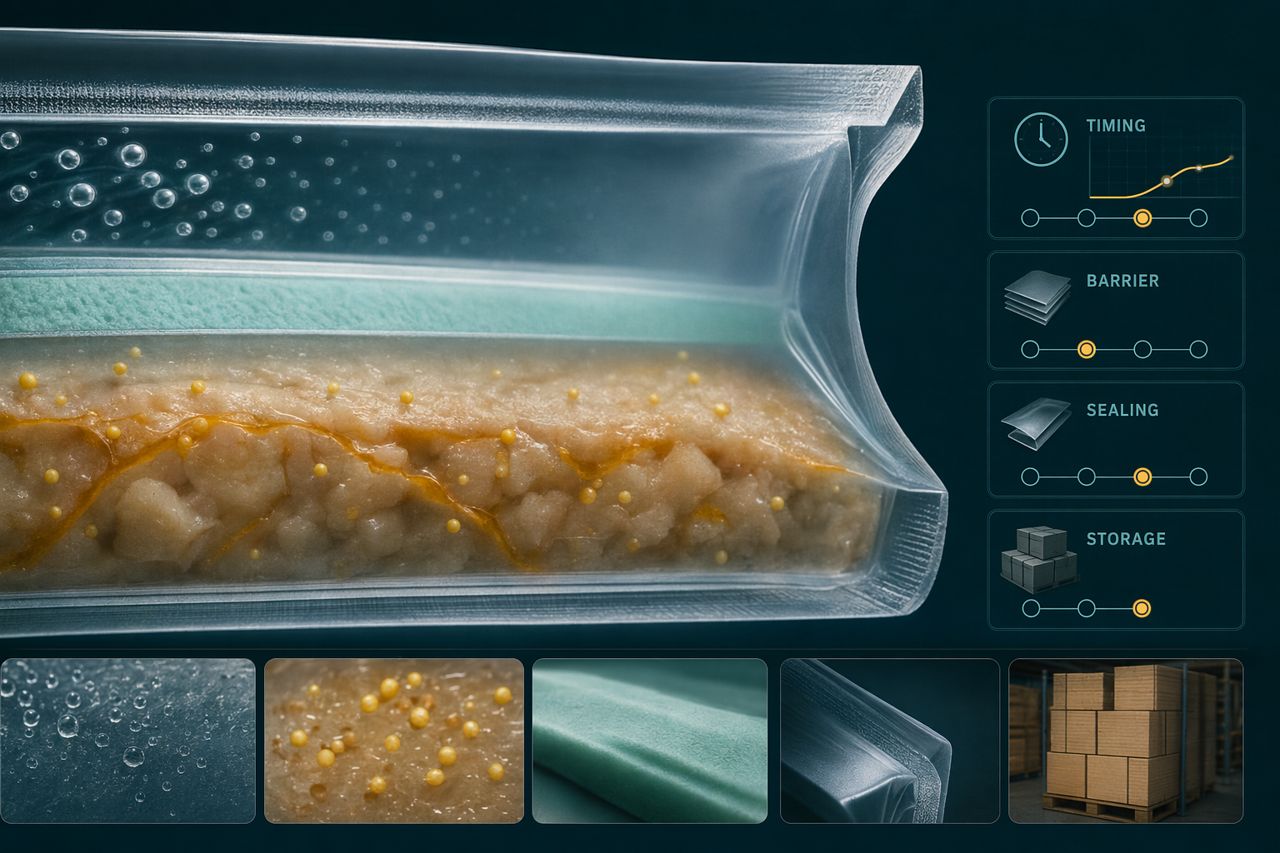
In oxygen-sensitive foods, beverages, ingredients, and packaged systems, Glucose Oxidase can reduce dissolved or headspace oxygen when glucose and moisture are available. Selection priorities include dispersion, reaction timing, residual substrate, packaging barrier, and compatibility with the product matrix.
Use this route when the value is shelf-life protection, color stability, flavor protection, or reduced oxidative change.
The reaction produces hydrogen peroxide. In some systems this is the intended functional output; in others it must be limited or removed. Selection must account for peroxide tolerance of the product, whether catalase or another control mechanism is needed, and how quickly peroxide should appear or disappear.
Use this route only with a clear peroxide-management plan.
In baking, Glucose Oxidase can support oxidative dough strengthening, improve handling, and contribute to crumb and volume outcomes when properly balanced with flour quality, hydration, mixing, fermentation, and other dough improvers.
For bakeries and premix manufacturers, the key question is not whether the enzyme reacts. The key question is whether it reacts in the right window: during mixing, resting, proofing, and early bake exposure.
In certain food and ingredient systems, Glucose Oxidase may support preservation through oxygen reduction, peroxide formation, and local acidification. Suitability depends heavily on regulatory status, product category, sensory limits, labeling expectations, and whether peroxide is acceptable in the finished design.
Selection should involve QA and regulatory review early, not after a pilot batch.
Glucose Oxidase is widely used in glucose detection formats because the reaction can be coupled to measurable oxygen or peroxide changes. For biosensing, consistency, purity profile, immobilization behavior, and lot traceability often matter more than the same formulation attributes valued in food processing.
A bulk grade that performs well in one factory can underperform in another because the limiting factor is often not the enzyme itself. It may be oxygen transfer, glucose availability, moisture, mixing, residence time, or a competing ingredient.
Evaluate these process factors before requesting pricing.
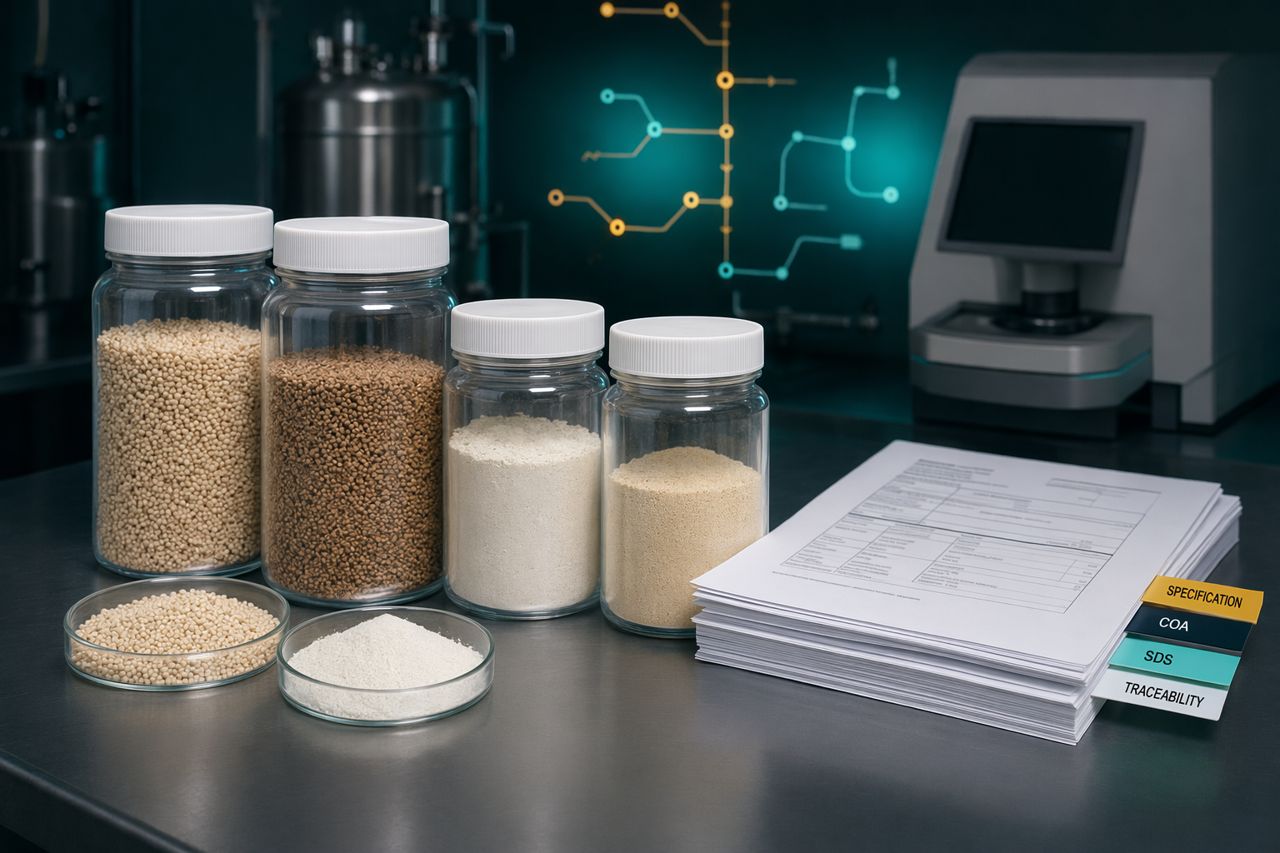
For bulk purchasing, declared activity is only one part of the decision. The physical format and carrier system often determine whether the enzyme can be used reliably on the line.
Powdered Glucose Oxidase is common for dry blending, premixes, bakery improvers, ingredient systems, and general industrial formulation. Review flowability, dust profile, carrier type, particle behavior, blend uniformity, and dissolution behavior.
Choose powder when dry handling, inventory efficiency, and compatibility with existing blending operations are priorities.
Granulated formats can improve handling in facilities where airborne enzyme exposure, operator comfort, and dosing uniformity are important. They may also reduce segregation risk in certain dry blends.
Choose granulated formats when the enzyme must move through industrial blending, weighing, or premix operations with tighter dust-control expectations.
Liquid Glucose Oxidase can be practical for dosing into aqueous systems, continuous processes, or applications where rapid dispersion is required. Review preservation system, viscosity, pumpability, freeze sensitivity, microbial control, and compatibility with your dosing equipment.
Choose liquid when metering accuracy and dispersion speed are more important than dry inventory simplicity.
Some biosensing, filtration, or repeated-use processes may require immobilized or protected enzyme formats. These are selected around surface compatibility, leaching behavior, response consistency, and system lifetime rather than standard ingredient handling.
A late document gap can delay an otherwise successful pilot. Ask for production-relevant documentation before commercial qualification.
Typical B2B document requests include:
Do not wait until purchasing to ask for these files. If your QA team needs them, request them during supplier comparison.
A bench test that proves the reaction is not the same as a production trial that proves commercial fit. Design the pilot to answer the operational question you actually need solved.
For baking, evaluate dough handling, fermentation tolerance, proof stability, oven response, crumb, volume, and sensory impact.
For oxygen scavenging, measure the time profile of oxygen reduction under actual packaging, fill level, closure, barrier, storage, and distribution conditions.
For preservation support, assess sensory effects, peroxide behavior, microbial objective, regulatory status, and finished-product limits.
For biosensing, evaluate response time, baseline drift, immobilization stability, lot consistency, and interference from the actual sample matrix.
Avoid these preventable issues when buying bulk Glucose Oxidase.
A useful quote request should give enough detail for a technical and commercial fit check. Include:
If you are comparing bulk Glucose Oxidase grades, send the process context first. Oxyveil can review the intended application, format requirement, documentation needs, and commercial volume before pricing.

Tell us your application and volume — we reply with pricing and lead time.