Glucose Oxidase in Enzyme Blends
Glucose Oxidase is rarely purchased for chemistry alone. It is purchased because it can solve a formulation problem: controlled oxygen removal, oxidative strengthening, peroxide generation, or shelf-life support inside a larger enzyme system.
For blend manufacturers, the practical question is not whether Glucose Oxidase works. It is whether it works cleanly with the other enzymes, carriers, processing aids, and storage conditions already in the formulation.
What Glucose Oxidase contributes to a blend
Glucose Oxidase catalyzes the oxidation of beta-D-glucose in the presence of oxygen. The main reaction products are gluconic acid and hydrogen peroxide.
In industrial blends, that gives formulators four useful levers:
- Oxygen control — reducing dissolved or headspace oxygen where oxidation is undesirable.
- Oxidative structure building — supporting protein network strengthening in dough systems.
- Preservation support — creating an unfavorable environment for selected spoilage pathways when designed correctly.
- Signal chemistry — supporting biosensor and diagnostic-style formulations where glucose conversion is part of the detection sequence.
The value is highest when the blend is designed around oxygen availability, substrate access, peroxide tolerance, and the timing of enzyme activation.
Where Glucose Oxidase fits in enzyme blends
Bakery improvers and flour treatment systems
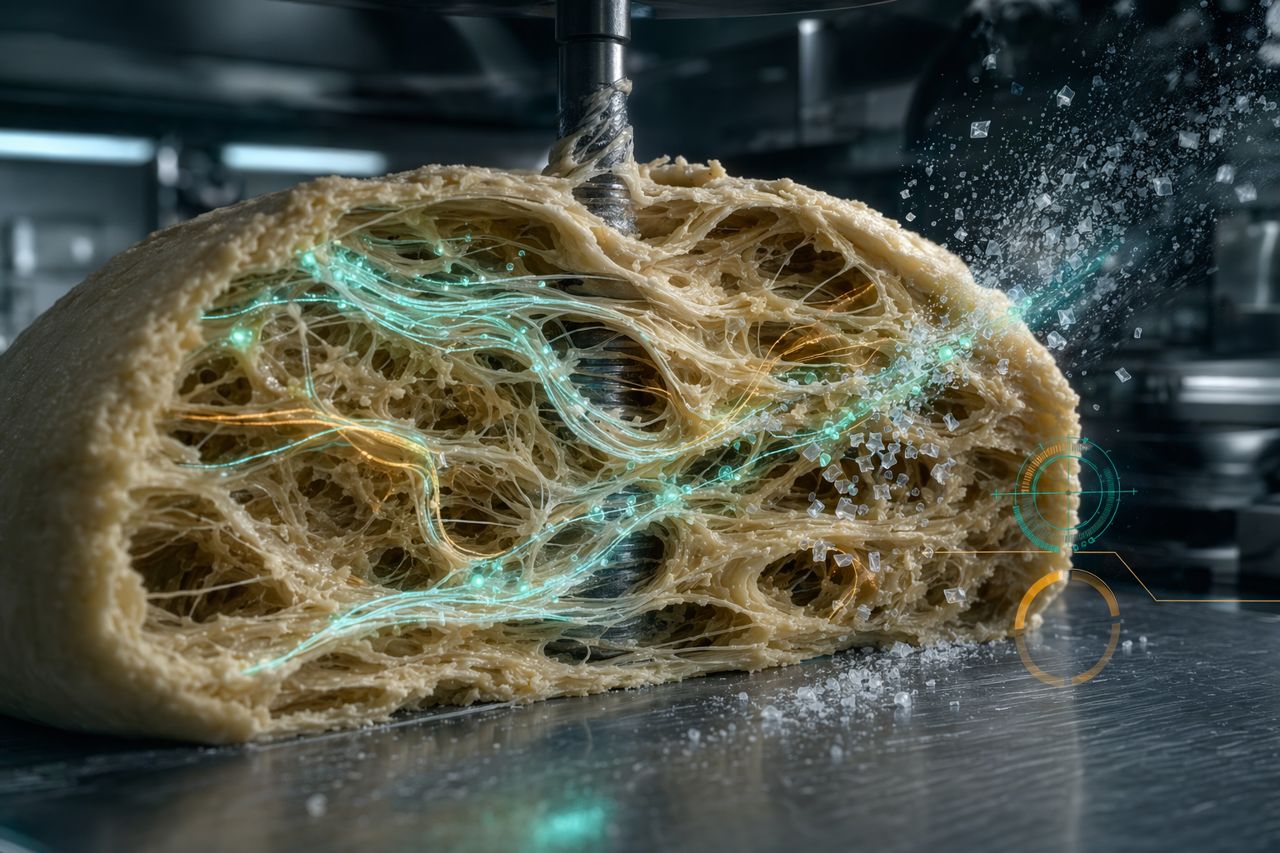
In bakery blends, Glucose Oxidase is commonly used to improve dough handling, gas retention, and finished product consistency. Its oxidative effect can help reinforce gluten networks and reduce stickiness in certain dough systems.
It is often formulated alongside:
- Xylanase for dough machinability and volume support.
- Amylase for fermentable sugar management and crumb softness.
- Lipase for emulsification and dough tolerance.
- Hemicellulase or cellulase where fiber or bran fractions affect water handling.
- Ascorbic acid or other oxidizing aids, depending on regional formulation practice.
The key is balance. Too little oxidative contribution may be invisible in production. Too much can produce tight dough, reduced extensibility, or processing inconsistency.
Food preservation and oxygen-scavenging blends
Glucose Oxidase can support oxygen depletion in liquids, semi-solids, and packaged food systems when glucose, oxygen, moisture, and contact time are present.
Typical design targets include:
- Reduced oxidative flavor development.
- Lower oxygen exposure for color-sensitive ingredients.
- Support for freshness in selected packaged systems.
- Controlled peroxide formation where compatible with the food matrix.
Peroxide management is central. In some systems, peroxide is useful. In others, it must be moderated to protect flavor, pigment, vitamins, cultures, or sensitive enzymes.
Feed additive and premix systems
In feed-related blends, Glucose Oxidase may be used as part of a broader intestinal environment or freshness strategy, depending on the intended formulation concept and local regulatory position.
Compatibility with acids, minerals, binders, probiotics, and pelleting exposure should be checked at the complete premix level. A stable single enzyme does not guarantee a stable finished blend.
Biosensing and specialty technical blends
In glucose-responsive systems, Glucose Oxidase can serve as the conversion engine that links glucose presence to a measurable downstream response. Formulation attention shifts toward signal stability, immobilization compatibility, peroxide handling, and batch-to-batch reproducibility.
Compatibility with common blend partners
Glucose Oxidase can be highly blendable, but it is not passive. It changes the local redox environment, consumes oxygen, and generates peroxide. Those effects can help or harm nearby actives.
Usually compatible with careful formulation
- Amylases where sugar release and dough performance need coordination.
- Xylanases and hemicellulases in bakery improver systems.
- Lipases where dough tolerance or emulsification is part of the performance target.
- Catalase when peroxide control is required.
- Carriers such as starches, flours, maltodextrin, or mineral carriers, subject to moisture and flow testing.
Requires closer review
- Proteases where gluten weakening may oppose oxidative strengthening.
- Reducing agents that may counter the intended oxidative effect.
- Highly reactive minerals that may accelerate loss of activity or affect peroxide behavior.
- Live cultures and probiotics where peroxide exposure may reduce viability.
- Color, flavor, or vitamin systems that are oxidation-sensitive.
Formulation variables that matter
1. Oxygen availability
Glucose Oxidase needs oxygen. In sealed, dense, or low-aeration systems, performance can be limited by oxygen transfer rather than enzyme concentration. For oxygen-scavenging systems, this is often the point. For dough systems, mixing intensity and process timing influence the result.
2. Glucose access
The enzyme needs available glucose. In bakery blends, glucose may be present directly or generated through starch conversion by amylases. In preservation systems, the matrix must provide accessible substrate or the formulation must account for it.
3. Moisture activation
Dry blends should remain stable in storage but activate rapidly when hydrated. Carrier choice, anti-caking system, residual moisture, and packaging barrier all affect shelf behavior.
4. Peroxide tolerance
Hydrogen peroxide is a useful reaction product only when the blend is designed for it. If peroxide may damage flavor, color, vitamins, enzymes, cultures, or packaging interactions, consider catalase pairing or process-stage separation.
5. pH and thermal profile
Glucose Oxidase performance depends on the final matrix, not the ingredient label alone. Check the pH profile, heat exposure, hold time, and point of addition in the actual process.
Practical blend design approaches
For bakery premixes
Start with the product problem rather than the enzyme list:
- Sticky dough or weak handling may call for oxidative support.
- Low volume may require coordination with xylanase, amylase, and emulsifier systems.
- Tight crumb or poor extensibility may indicate excessive oxidation or an opposing protease balance.
- Variable flour quality may require a more tolerant formulation window.
Run side-by-side bake trials against the current improver, not against a blank alone. The buying decision is usually based on line behavior, proofing tolerance, volume, crumb, and finished product consistency.
For oxygen-scavenging blends
Define the oxygen problem precisely:
- Dissolved oxygen in a liquid phase.
- Headspace oxygen in packaged goods.
- Oxidation-sensitive color, flavor, or nutrient components.
- Shelf-life variability caused by oxygen ingress.
Then confirm that glucose, water activity, contact time, and enzyme distribution are sufficient for the intended scavenging effect.
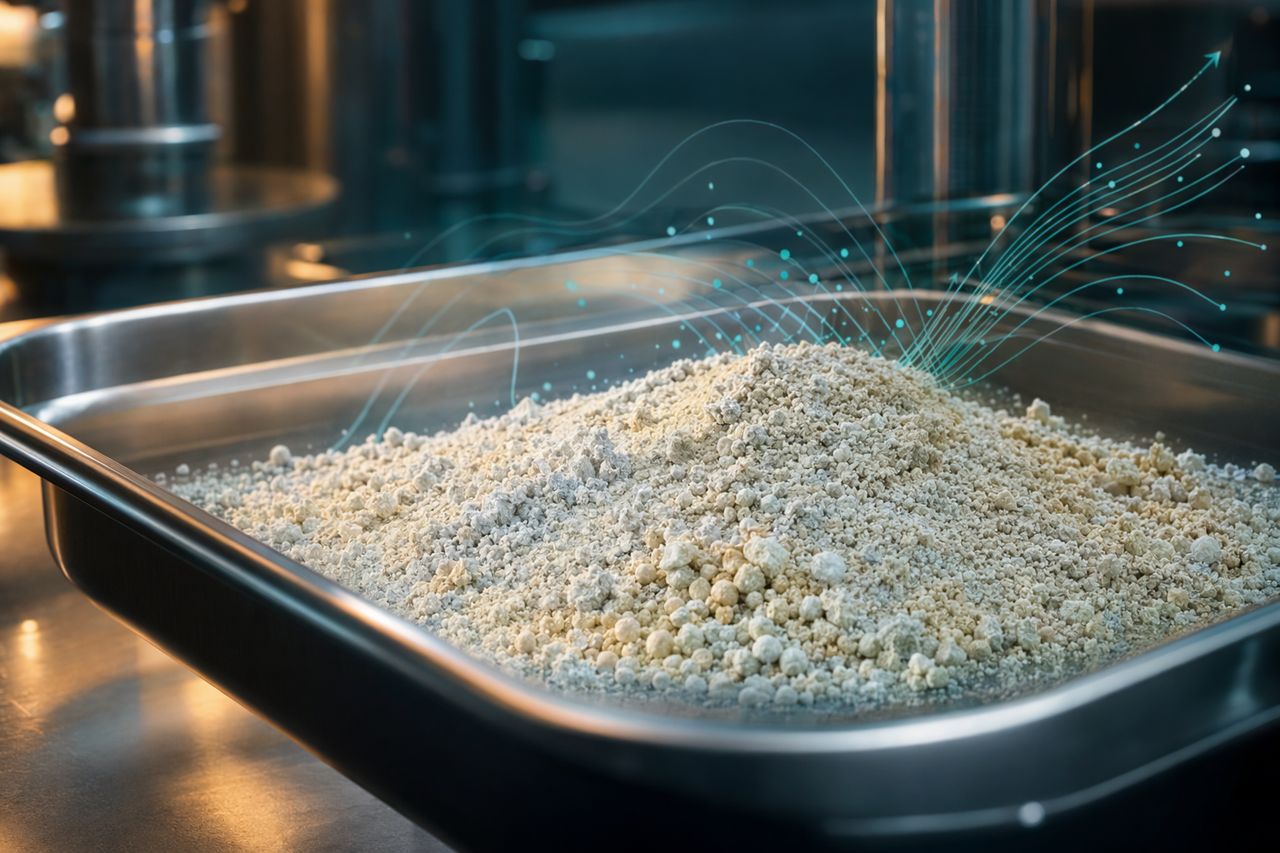
For multi-enzyme powder blends
Treat physical blend quality as a performance variable:
- Match particle size where possible to reduce segregation.
- Select carriers that protect activity without slowing hydration excessively.
- Control residual moisture and avoid hygroscopic imbalance.
- Validate flow after storage, not only after blending.
- Use barrier packaging when humidity or oxygen exposure can shorten shelf life.
Manufacturing and handling guidance
For commercial premix production, Glucose Oxidase should be handled as a functional bioactive ingredient, not as an inert powder.
Recommended controls include:
- Closed or low-dust transfer where possible.
- Consistent addition sequence during blending.
- Defined mixing time to avoid under-blending or over-processing.
- Retention samples from first production batches.
- Stability checks on the finished blend, not only on the enzyme concentrate.
- Application testing after storage under realistic warehouse conditions.
Use standard industrial hygiene practices for enzyme powders, including dust control and appropriate respiratory protection during handling.
Specification questions to settle before buying
Procurement and formulation teams should align on these points before requesting commercial pricing:
- What is the target application: bakery, preservation, feed, biosensing, or another technical use?
- Is the blend dry, liquid, encapsulated, granulated, or tableted?
- Which enzymes and additives are already in the formula?
- Is peroxide desired, tolerated, or unwanted?
- Does the system contain accessible glucose?
- Where is the enzyme added in the process?
- What storage temperature, humidity exposure, and shelf-life target must the blend survive?
- What performance test will determine acceptance?
Clear answers reduce reformulation cycles and help identify the right Glucose Oxidase grade for the blend.
Common failure modes
The blend works in the lab but not in production
Usually caused by oxygen transfer, mixing energy, process timing, or matrix differences. Scale-up should include actual line conditions whenever possible.
The dough becomes too tight
The oxidative effect may be too strong or poorly balanced with extensibility aids. Review dose ladder, flour quality, protease presence, and oxidizer system.
Shelf-life performance drops during storage
Check moisture uptake, carrier compatibility, packaging barrier, reactive co-ingredients, and warehouse heat exposure.
Other enzymes lose performance
Peroxide or trace reactivity may be affecting neighboring actives. Consider catalase, encapsulation, physical separation, or staged addition.
What to request from a supplier
For B2B blending, ask for information that supports formulation decisions rather than only a product name:
- Recommended application fit.
- Physical form and carrier system.
- Solubility or dispersibility behavior.
- Blend compatibility notes.
- Storage and handling guidance.
- Allergen, dietary, regulatory, and documentation package as needed.
- Commercial pack options and lead time.
- Sample availability for application testing.
The strongest supplier response will connect the enzyme grade to your processing reality: matrix, moisture, oxygen, partner enzymes, packaging, and acceptance criteria.
Request pricing for a Glucose Oxidase blend project
Tell us what you are formulating, what the blend must achieve, and which co-ingredients are already locked. We will respond with grade guidance, documentation availability, sample options, and commercial pricing.
Short answer
Glucose Oxidase can be a powerful component in enzyme blends when oxygen, glucose, moisture, peroxide, and partner-enzyme compatibility are designed together. The best results come from application-led formulation, realistic storage testing, and production-scale validation.