Glucose Oxidase for noodles, steamed bread, and wheat-based foods
Oxyveil supplies Glucose Oxidase for manufacturers that need cleaner dough handling, stronger wheat structure, and more consistent finished texture across noodles, steamed bread, buns, wrappers, and other flour-based foods.
Glucose Oxidase helps convert naturally available glucose in dough systems into gluconic acid and low, controlled peroxide formation. In wheat processing, that oxidative pathway can support gluten network development, improve dough tolerance, reduce stickiness, and create a more resilient bite without relying only on mechanical mixing intensity or harsh oxidizing improvers.
What it is used for
Glucose Oxidase is commonly evaluated in wheat foods where manufacturers need tighter process control and more stable texture:
- Fresh, chilled, frozen, and dried noodles — improved bite, elasticity, sheet integrity, and reduced surface tack.
- Steamed bread and buns — better gas retention, smoother crumb, improved shape stability, and more controlled spring.
- Dumpling and wonton wrappers — stronger sheeting performance and improved resistance to tearing.
- Chinese-style wheat products — more consistent dough handling under variable flour quality.
- Industrial dough systems — improved tolerance during mixing, resting, sheeting, steaming, freezing, or drying.
Functional benefits in wheat processing
Stronger dough resilience
Glucose Oxidase supports oxidative strengthening within the gluten matrix. For production teams, the visible effect is typically a dough that feels less slack, recovers better after mechanical stress, and holds shape more consistently through downstream forming.
Cleaner sheeting and cutting
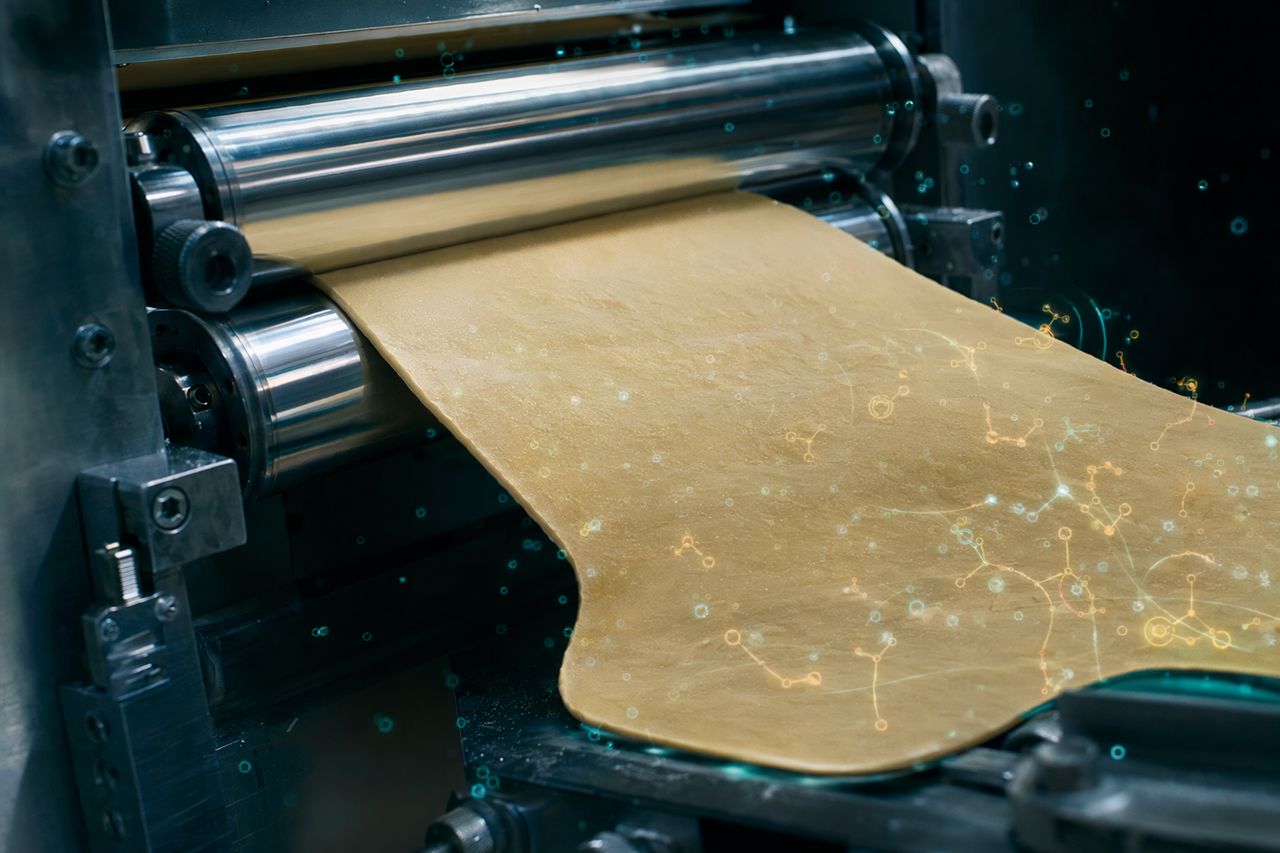
In noodle and wrapper lines, dough that is too sticky can create roll build-up, uneven sheet thickness, edge defects, and higher rework. Properly balanced Glucose Oxidase can help reduce surface tack and improve sheet continuity.
Improved bite and chew
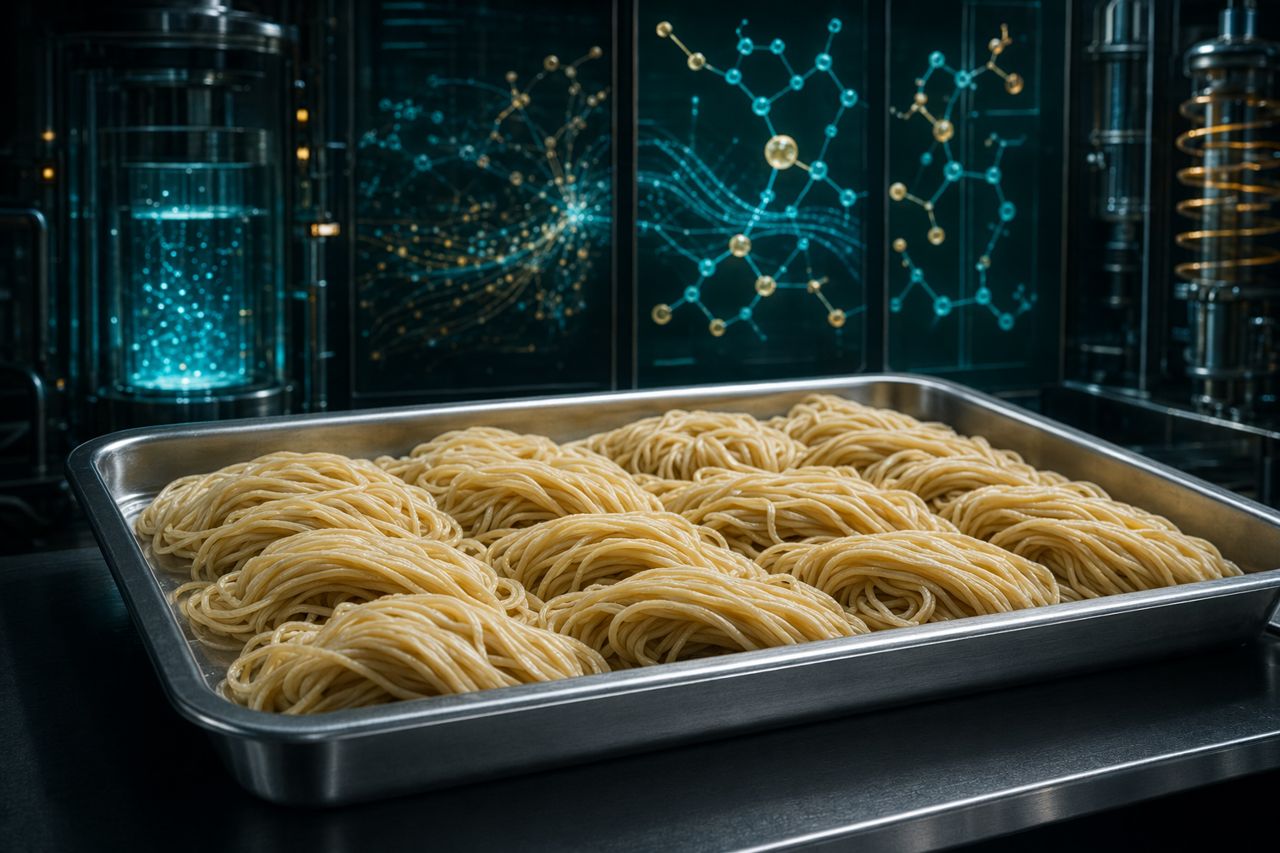
For noodles, the target is not simply hardness. The commercial target is a controlled bite: elastic, coherent, and resistant to mushiness after cooking or holding. Glucose Oxidase can contribute to that structure when matched with flour strength, hydration, salt system, and process time.
Better steamed bread structure
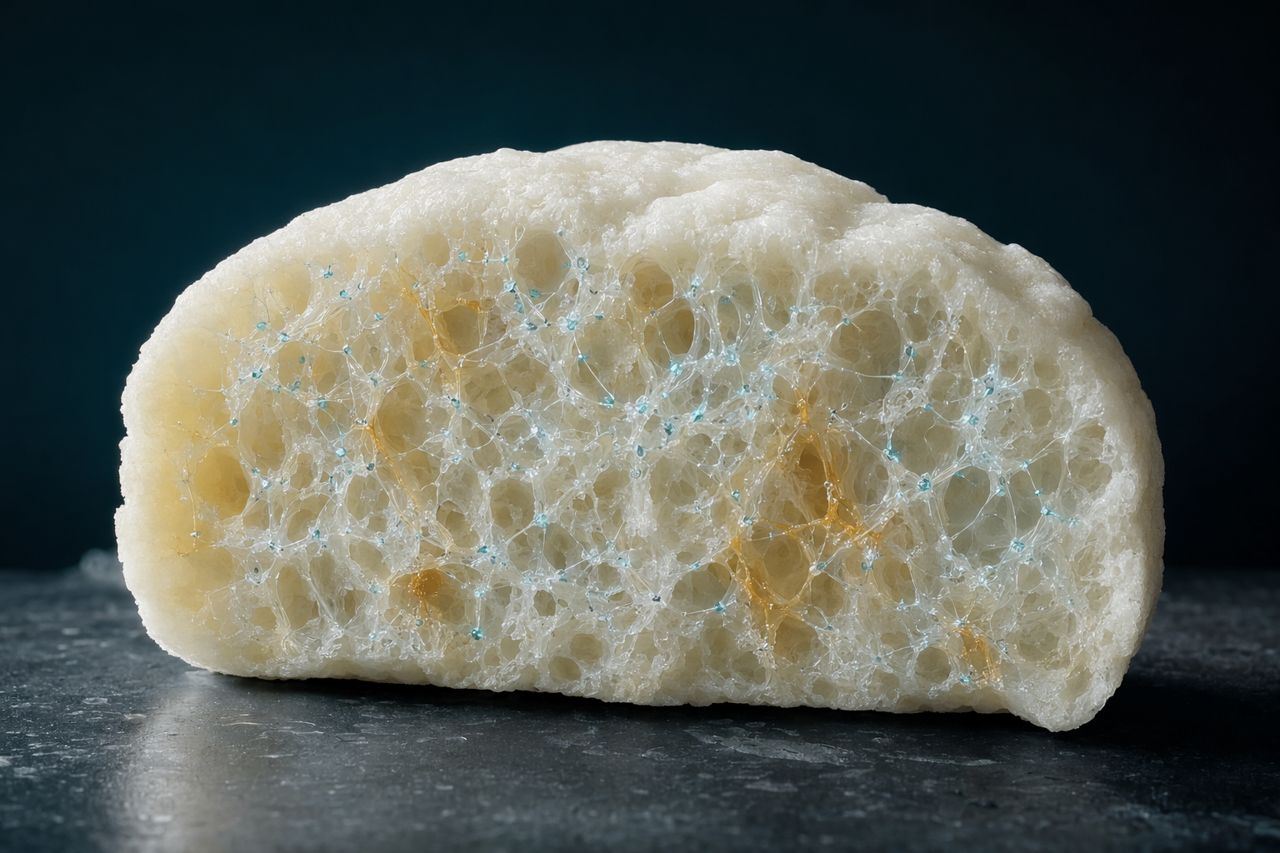
In steamed bread and buns, Glucose Oxidase can help improve dough stability during proofing and steaming. Benefits may include smoother skin, more stable height, better internal crumb uniformity, and reduced collapse in sensitive formulas.
Processing tolerance across flour variation
Wheat quality varies by crop, mill stream, and supplier. Glucose Oxidase gives formulation teams a controlled oxidative lever for improving tolerance when protein quality, damaged starch, or water absorption shifts.
How Glucose Oxidase works in dough
Glucose Oxidase uses oxygen and glucose present in the dough environment to form gluconic acid and peroxide species. In wheat foods, the practical value comes from how this reaction influences protein interactions and dough rheology.
The result is a more structured gluten network when the enzyme is properly balanced. Too little may be difficult to observe. Too much can make dough overly tight, reduce extensibility, or create processing resistance. Oxyveil supports controlled pilot evaluation so the enzyme is positioned as a precision tool, not a blunt improver.
Application guidance by product type
Noodles
Use Glucose Oxidase when the target is improved bite, reduced stickiness, and stronger sheet integrity.
Typical evaluation points:
- Compare control dough against low, standard, and elevated treatment points.
- Track sheet smoothness, roll release, strand definition, cooking loss, bite, and holding texture.
- Evaluate after the full commercial process, not only immediately after mixing.
- Confirm performance in fresh, chilled, frozen, or dried formats as required.
Steamed bread and buns
Use Glucose Oxidase when the target is dough stability, smoother structure, and reduced collapse risk.
Key observations:
- Dough handling during mixing and dividing.
- Surface finish after proofing.
- Volume and shape retention after steaming.
- Crumb uniformity and eating texture after cooling.
- Performance after frozen storage if applicable.
Wrappers and sheeted wheat foods
Use Glucose Oxidase to improve sheet strength where tearing, sticking, or inconsistent thickness is limiting line speed.
Practical checkpoints:
- Sheeting pressure and dough return behavior.
- Surface dryness versus cracking risk.
- Cutting definition.
- Sealability in filled products.
- Texture after boiling, steaming, frying, or freezing.
Formulation and process considerations
Flour quality
Glucose Oxidase response depends strongly on flour protein quality, water absorption, ash level, damaged starch, and native reducing conditions. Strong flour may require a different balance than weak or variable flour.
Hydration and mixing
The enzyme is oxygen-linked, so mixing profile, dough density, and water distribution influence performance. A formulation that responds well in a lab mixer should still be confirmed on the production mixer and full sheeting line.
Salt, alkali, and dough improver systems
Noodle and steamed bread systems often include salt, alkaline salts, emulsifiers, hydrocolloids, reducing agents, or other enzyme systems. Glucose Oxidase should be evaluated in the complete formula because interactions can shift dough strength and extensibility.
Resting and proofing time
Longer rest, proof, or hold times can magnify structural changes. Production trials should include the real plant timing window, including worst-case delays.
Thermal process
Steaming, boiling, drying, frying, and freezing each reveal different parts of dough performance. Texture should be assessed after the actual finished-product process and shelf-life condition.
Compatibility with other functional ingredients
Glucose Oxidase can be used alongside common wheat-processing ingredients, but balance matters. It may be paired with selected amylases, xylanases, lipases, emulsifiers, oxidants, hydrocolloids, or protein systems depending on the desired texture.
For best results, avoid evaluating it in isolation if the final commercial formula includes a broader improver system. The correct question is not whether Glucose Oxidase works alone; it is whether it improves the full dough system at the right balance.
Pilot trial framework
A disciplined trial is the fastest route to a commercially useful decision.
- Define the target defect — sticky dough, weak bite, poor volume, sheet tearing, collapse, rework, or inconsistent line speed.
- Set a control formula — same flour, hydration, mixing profile, resting time, and thermal process.
- Run graduated treatment points — low, standard, and elevated inclusion levels suitable for the formula.
- Measure production behavior — roll release, dough recovery, proof tolerance, cutting quality, cooking loss, and handling time.
- Score finished texture — bite, elasticity, crumb, smoothness, resilience, and shelf-life texture.
- Confirm on plant equipment — final approval should be based on production-scale behavior, not bench observation alone.
Procurement and quality documentation
For B2B purchasing and technical review, Oxyveil can provide product information aligned to your application and market requirements, including:
- Product specification overview.
- Food-grade status documentation.
- Allergen and dietary statements where applicable.
- Carrier and excipient declaration.
- Country-of-origin and traceability information.
- Packaging format and shelf-life guidance.
- Safety and handling documentation.
- Regulatory support for intended market review.
Recommended buyers
This application is relevant for:
- Noodle manufacturers.
- Steamed bread and bun producers.
- Frozen dough and frozen wheat food manufacturers.
- Dumpling, wonton, and wrapper factories.
- Premix and flour improver blenders.
- Industrial bakeries using Asian-style wheat processes.
- Formulation teams standardizing performance across variable flour supply.
Why Oxyveil for wheat food applications
Oxyveil focuses on oxygen-aware enzyme function in industrial systems. For wheat processors, that means practical guidance around reaction balance, dough strength, process timing, and finished texture rather than generic enzyme descriptions.
We support procurement and formulation teams with application-specific documentation, sample planning, and trial structure so that Glucose Oxidase can be evaluated against real plant constraints.
Request pricing or a sample plan
If you are evaluating Glucose Oxidase for noodles, steamed bread, wrappers, or wheat-based foods, send your target product, flour type, process flow, and current defect. Oxyveil will respond with suitable product options, documentation, and commercial pricing.