Glucose Oxidase for Food Preservation and Oxygen Management
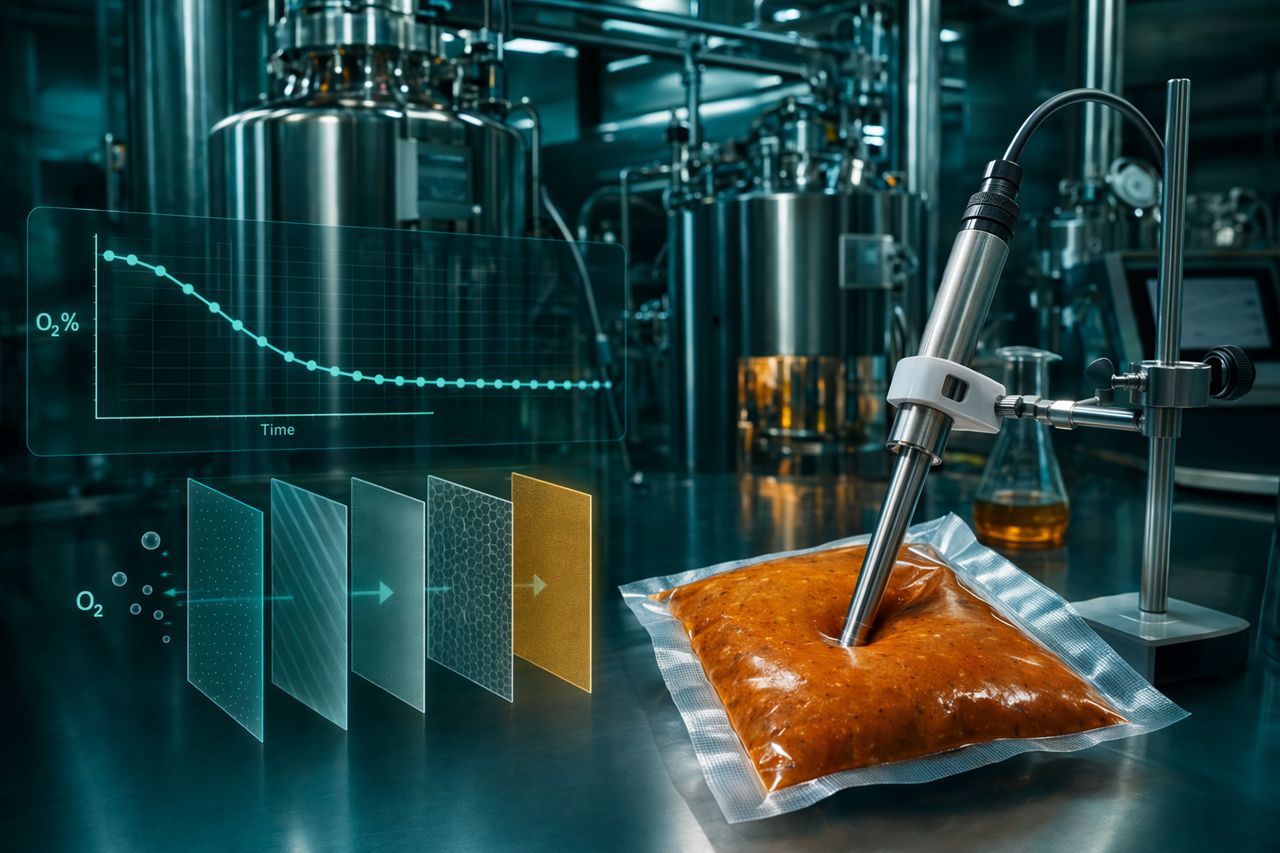
Oxygen is useful during processing, then often becomes a liability in the pack. It can drive color loss, stale notes, lipid oxidation, vitamin degradation, and reduced shelf-life confidence. Oxyveil Glucose Oxidase is used to reduce oxygen-related deterioration in selected food systems where glucose, moisture, oxygen, and process conditions are aligned.
Glucose Oxidase catalyzes the oxidation of glucose in the presence of oxygen, producing gluconic acid and hydrogen peroxide. In preservation and oxygen-management programs, that reaction can be used to lower available oxygen in the product phase, headspace, or enzyme-accessible boundary layer. Where peroxide control is required, the formulation can be designed with compatible downstream controls, including catalase where appropriate.
Where it fits
Oxyveil Glucose Oxidase is considered for food systems where oxygen exposure is a measurable shelf-life driver and the matrix can support controlled enzymatic conversion.
Common evaluation areas include:
- Sauces, dressings, and condiments where oxidative flavor change or color drift affects shelf-life targets
- Beverages and liquid concentrates where dissolved oxygen management is part of quality control
- Egg-based and dairy-adjacent formulations where oxygen reduction can support stability goals, subject to matrix compatibility
- Bakery fillings, glazes, and intermediate-moisture foods where oxygen ingress contributes to sensory decline
- Modified-atmosphere and high-barrier packaging systems where residual oxygen reduction improves pack performance
- Oxygen-scavenging concepts for coatings, sachet-adjacent systems, liners, or reactive packaging layers, subject to food-contact and regulatory review
What the enzyme does in preservation systems
In a suitable formulation, Glucose Oxidase can support:
- Lower dissolved oxygen before or after filling
- Reduced residual headspace oxygen over time
- Better protection against oxidation-sensitive flavors, colors, and nutrients
- More consistent shelf-life performance in sealed packs
- Reduced dependence on aggressive thermal or chemical interventions in selected use cases
- Controlled formation of gluconic acid, which may influence pH and flavor balance
The preservation effect is not universal. It depends on available glucose, water activity, pH, temperature, oxygen transfer, packaging permeability, enzyme contact time, and whether peroxide formation is acceptable or must be removed.
Formulation considerations for buyers and process teams
A successful oxygen-management program starts with the oxygen load, not with a generic addition rate. Oxyveil supports application screening around the real product, package, and shelf-life target.
Key questions include:
- Where is the oxygen? Dissolved in the product, trapped in headspace, entering through packaging, or introduced during filling.
- Is glucose available? Native glucose may be sufficient in some systems; others need a compatible glucose source.
- How much water is available? Low-moisture systems may limit enzyme mobility and reaction speed.
- What is the thermal sequence? The enzyme can be used before heat treatment, after cooling, or in a package component depending on the process design.
- Will gluconic acid matter? The reaction may shift acidity, which can be useful, neutral, or undesirable depending on the product.
- How will peroxide be handled? Hydrogen peroxide generation must be evaluated for sensory, regulatory, and compatibility impact.
- What is the packaging barrier? Oxygen scavenging must be matched to ingress rate and shelf-life duration.
Peroxide management
Glucose Oxidase produces hydrogen peroxide as part of its reaction pathway. In some systems, controlled peroxide formation contributes to antimicrobial hurdles; in others, it must be minimized or decomposed to avoid flavor, color, or ingredient interactions.
For peroxide-sensitive foods, a paired enzyme strategy may be evaluated. Catalase can convert hydrogen peroxide into water and oxygen, while Glucose Oxidase continues to consume oxygen as glucose is available. The net result depends on dosing balance, oxygen transfer, package geometry, and reaction timing.
Process integration options
Oxyveil Glucose Oxidase can be evaluated in several integration points:
- Pre-fill treatment: Reduce dissolved oxygen before packaging.
- In-line blending: Add during controlled mixing where residence time is predictable.
- Post-fill reaction window: Allow oxygen removal after sealing under defined storage conditions.
- Reactive packaging component: Explore immobilized or localized enzyme concepts where food-contact compliance permits.
- Combined antioxidant strategy: Pair with packaging, inert gas flushing, chelators, or natural antioxidants when compatible.
The right approach depends on whether the target is rapid oxygen knockdown, long-duration ingress management, or protection during distribution.
Quality and specification priorities
For procurement and technical approval, typical review points include:
- Enzyme format and handling profile
- Carrier system and ingredient declaration impact
- Food-grade documentation package
- Allergen, GMO, halal, kosher, and country-specific requirements where applicable
- Microbiological and contaminant controls
- Lot-to-lot consistency
- Storage conditions and shelf-life
- Compatibility with the product pH, salt, sugar, alcohol, preservatives, heat exposure, and packaging format
Oxyveil can support technical discussions without requiring disclosure of trader-confidential assay methodology or internal production details.
Development pathway
A practical trial plan usually includes:
- Define the shelf-life failure mode: color, aroma, oxidation marker, dissolved oxygen, headspace oxygen, or microbial hurdle.
- Measure baseline oxygen before and after filling.
- Screen enzyme addition point and contact time.
- Evaluate glucose availability and pH shift.
- Check peroxide formation and removal strategy.
- Compare packaging barrier performance under accelerated and real-time storage.
- Confirm sensory, label, and regulatory fit before scale-up.
Request a quote or technical fit review
If you are evaluating Glucose Oxidase for oxygen management in a packaged food or beverage system, send the product type, processing temperature range, target shelf-life, packaging format, and current oxygen challenge. Oxyveil will respond with a suitable commercial discussion and next-step trial guidance.